


The Story
On November 24, 2026, HP Inc. reported results for its fiscal year, which ended October 31. Total revenue rose 9.5% to $60.5 billion. In the last quarter, revenue rose 9.3% to $16.0 billion, and adjusted earnings of 83 cents a share beat the 75 cents analysts expected, according to CNBC. HP also raised its quarterly dividend to 31 cents a share, and the stock jumped about 11% in midday trading the next day.
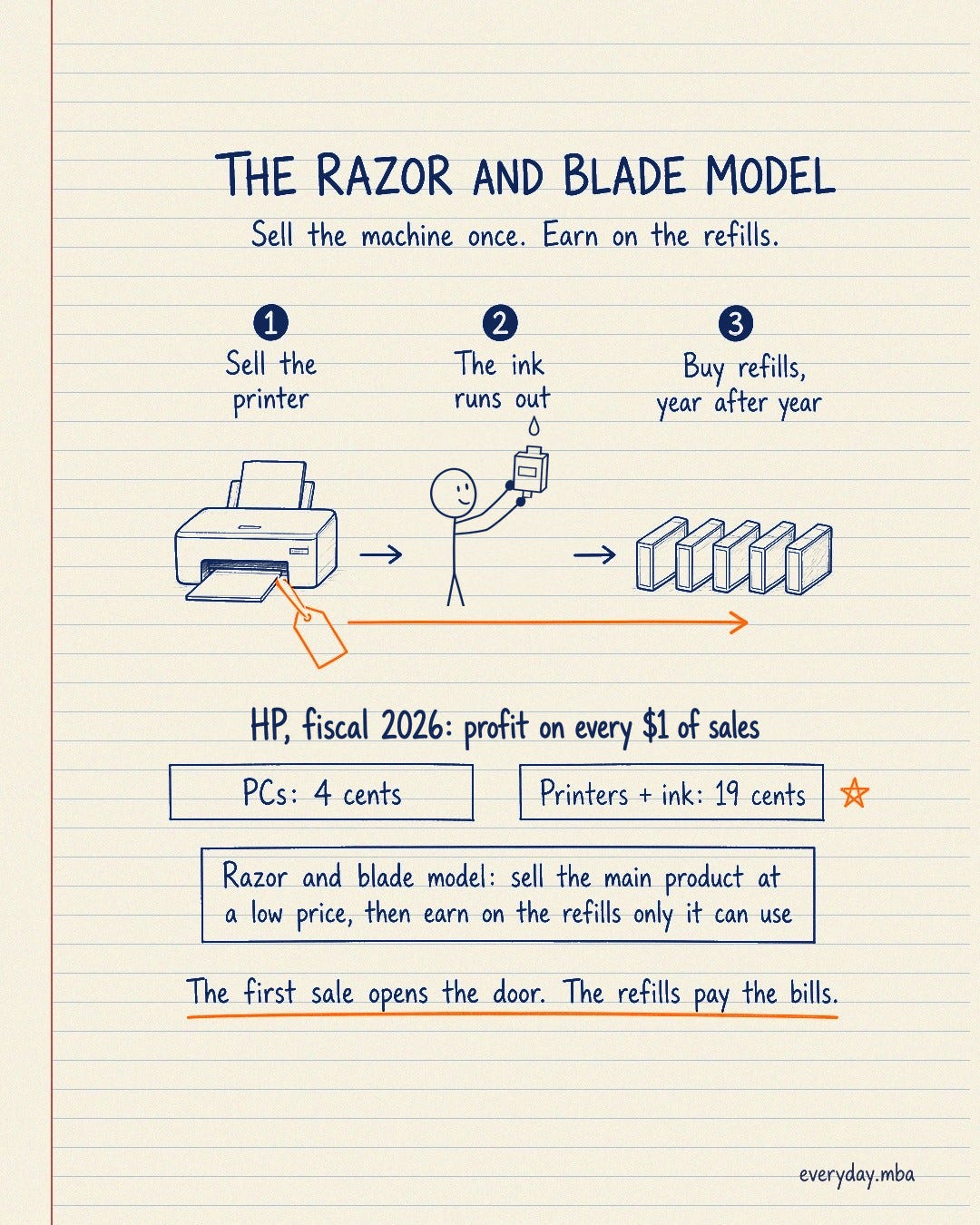
Most of the growth came from computers. HP’s PC business, which it calls Personal Systems, brought in $44.0 billion for the year, up 14%. But it kept only about 4 cents of profit for every dollar of sales. In the fourth quarter that slipped to about 3 cents, while HP said it was working through rising memory and storage costs.
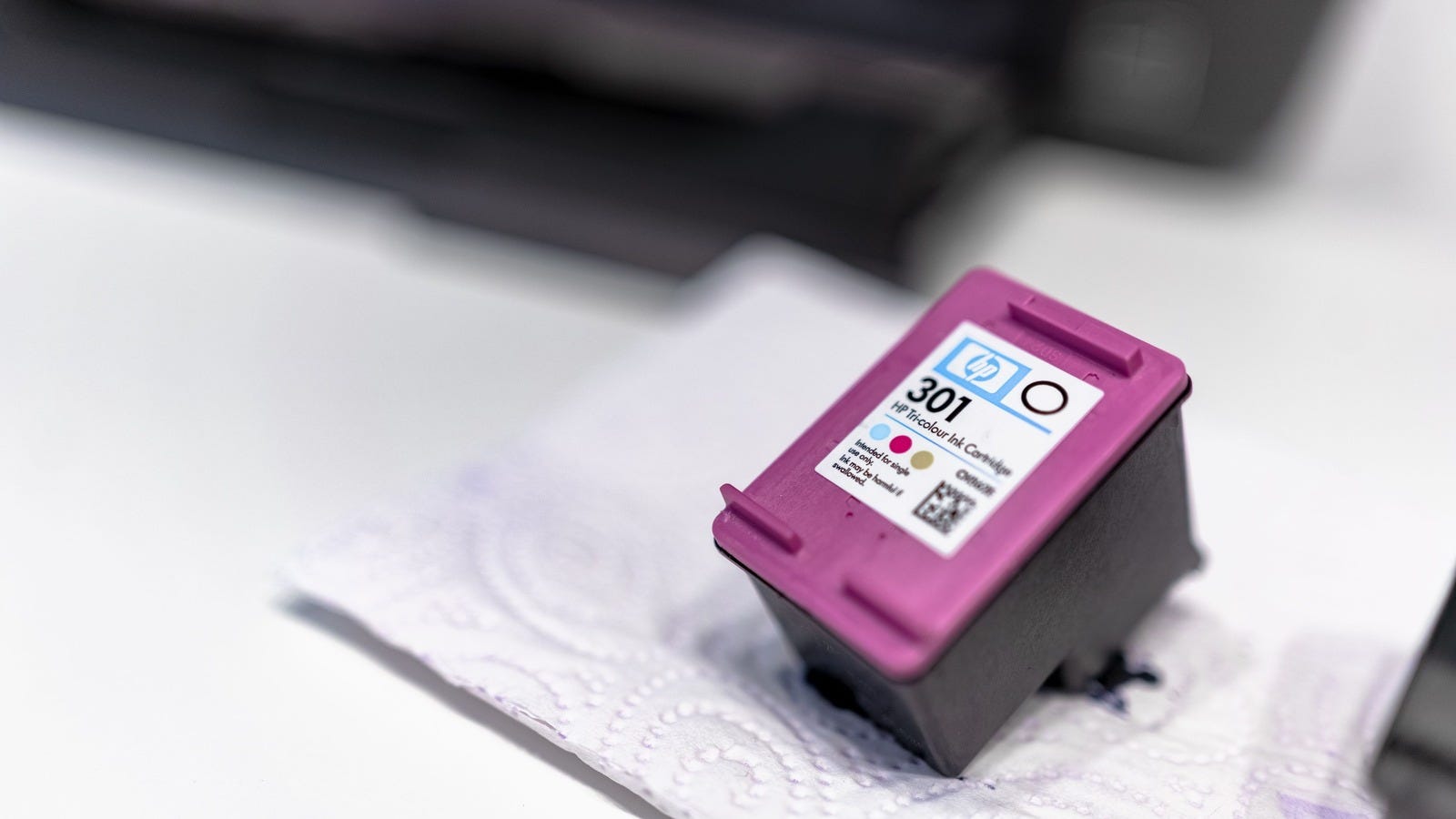
The printing business looked very different. Its revenue dipped 1% to $16.5 billion, yet it earned $3.08 billion in profit, compared with $1.93 billion from PCs. That is about 19 cents of profit on every dollar. About two thirds of printing revenue, $10.8 billion, came from supplies: ink, toner and the other refills that go into HP printers.
The Lesson
HP’s printers run on one of the oldest plays in business, the razor-and-blade model. You sell the main product at a modest price so it lands in as many homes and offices as possible. Then you earn most of your profit over the years on the refills that only that product uses. The first sale opens the door. The refills pay the bills.
The model works because of how people shop. A buyer compares printer prices once, in the store, and often picks the cheaper box. It's easy to skip adding up what the ink will cost over the next five years. Every cartridge after that is a small purchase, made when the printer is already on the desk and the old cartridge just ran dry. That is a much easier sale than the first one. HP’s own annual report shows the effect: in fiscal 2025, a shift in sales toward supplies helped soften a drop in Printing’s gross margin, the share of each sale left after the cost of making it.
That is how a business with about 27% of HP’s revenue earned about 60% more profit than the PC business. A PC is a one-time sale in a crowded market, and when the parts inside cost more, the profit gets squeezed right away. A printer keeps paying HP back for as long as it keeps printing.
The model has a weak spot, and HP’s numbers show that too. Refill money depends on how many printers are out there and how much people print. In fiscal 2025, HP said supplies revenue fell 3.4%, mainly because fewer HP printers were in use and people printed less. This year supplies dipped again, by 1%, and the number of printers HP sold fell 2% in the last quarter. Cheaper outside cartridges are another threat. HP’s annual report says imitation and refilled cartridges “are often available at lower prices.” Every printer that stops printing, or switches to off-brand ink, takes years of refill profit with it.
So the real asset in a razor-and-blade business is not this year’s machine sales. It is the number of machines still in use, and how loyal their owners are to the original refill.
How to Use It
1. Find the refill. Game consoles and games, pod coffee makers and pods, electric toothbrushes and brush heads, water pitchers and filters. Ask which part people buy once and which part they keep buying.
2. Price the whole life, not the sticker. Before you buy, add the machine to a few years of refills. The cheapest machine is not always the cheapest choice.
3. If you sell, protect the refill. The profit only shows up if customers keep using your product and keep choosing your refills. Make the machine easy to love, and give people a real reason to pay for the original over a cheaper copy.
4. Count the machines in use. When you study a company like this, today’s machine sales are a preview of refill sales later. A 2% drop in printers sold matters more for ink sales a few years from now than for this quarter.
5. Check where the profit really comes from. HP’s biggest business by sales is not its biggest by profit. Look at each part of a company separately before you decide which one matters most.
Sources
1. HP Inc., “HP Inc. Reports Fiscal 2026 Full Year and Fourth Quarter Results; Announces Dividend Increase,” HP Investor Relations, November 24, 2026. https://investor.hp.com/news-events/news/news-details/2026/HP-Inc--Reports-Fiscal-2026-Full-Year-and-Fourth-Quarter-Results-Announces-Dividend-Increase/default.aspx
2. HP Inc., Form 8-K, Exhibit 99.1, fiscal 2026 fourth quarter results, U.S. Securities and Exchange Commission, November 24, 2026. https://www.sec.gov/Archives/edgar/data/47217/000004721726000054/hp103126exhibit991q426.htm
3. HP Inc., Form 10-K for the fiscal year ended October 31, 2025, U.S. Securities and Exchange Commission, December 10, 2025. https://www.sec.gov/Archives/edgar/data/47217/000004721725000071/hpq-20251031.htm
4. CNBC, “Stocks making the biggest moves Wednesday: HP Inc, Ambarella, Nvidia, Sandisk & more,” November 25, 2026. https://www.cnbc.com/2026/11/25/stocks-moving-the-most-today-live-updates.html